Fukien Tea Bonsai Care: A Comprehensive Guide
Cultivating a thriving Fukien Tea Bonsai requires consistent moisture, proper fertilization, and attention to light exposure, ensuring healthy growth and vibrant foliage.
Understanding the Fukien Tea Bonsai
The Fukien Tea Bonsai (Ehretia obtusifolia) is a popular choice for bonsai enthusiasts, prized for its delicate leaves, attractive bark, and ability to produce fragrant, small white flowers. Originating from East and Southeast Asia, including the Philippines, it’s a resilient species adaptable to indoor environments.
These bonsai aren’t just aesthetically pleasing; they symbolize good luck and prosperity in some cultures. They are relatively easy to care for, making them suitable for beginners, but still offer enough complexity to engage experienced bonsai artists. Understanding its needs – particularly regarding watering and humidity – is crucial for success. Consistent care will reward you with a beautiful, long-lived miniature tree.
Origin and Characteristics
Native to regions spanning Eastern and Southeastern Asia, including the Philippines, Taiwan, and parts of Australia and Oceania, the Fukien Tea tree thrives in subtropical and tropical climates. This evergreen shrub, when cultivated as bonsai, typically reaches a modest height, rarely exceeding a few feet.
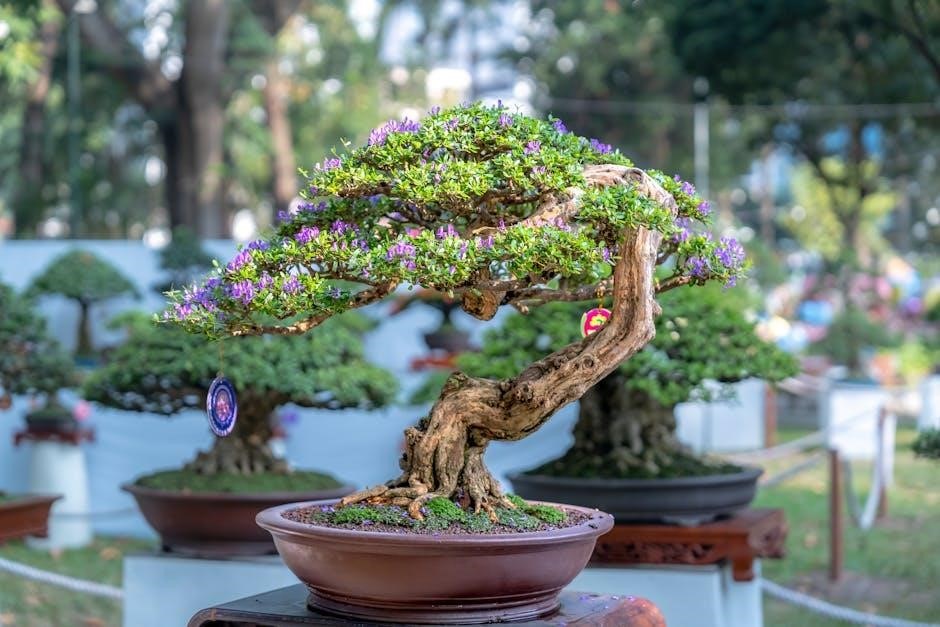
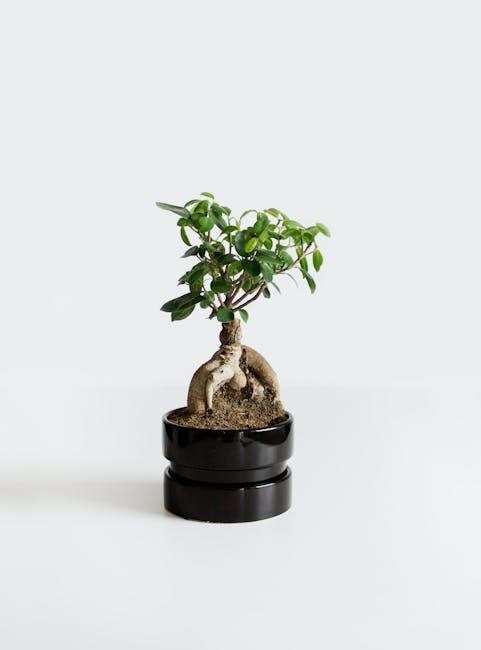
Its defining characteristics include glossy, oval-shaped leaves and a textured, often gnarled bark that develops beautifully with age. Small, fragrant white flowers appear throughout the year, adding to its ornamental appeal. The tree’s adaptability allows it to flourish both indoors and outdoors, though it prefers bright, indirect light and moderate humidity. It’s a robust species, capable of withstanding some neglect.
Choosing a Healthy Fukien Tea Bonsai
When selecting a Fukien Tea Bonsai, prioritize a tree with vibrant, glossy green leaves – avoid specimens exhibiting yellowing or excessive leaf drop, which can indicate stress or improper care. Examine the trunk for signs of healthy growth and interesting character, such as established taper and appealing bends;
Inspect the soil surface; it should be slightly moist, not overly saturated or bone dry. Gently check for pests by looking under leaves and along branches. Ensure the root ball feels firm and isn’t root-bound. A well-established bonsai will demonstrate a balanced branch structure and overall vigor, promising a rewarding cultivation experience.
Essential Care Practices
Consistent watering, appropriate soil, and regular fertilization are crucial for a flourishing Fukien Tea Bonsai, promoting robust growth and vibrant health.
Watering Techniques
Fukien Tea Bonsai require consistent moisture, but are sensitive to both overwatering and complete drying. Water generously when the soil surface feels dry to the touch, ensuring water drains freely from the pot’s drainage holes. A thorough soaking is preferable to frequent, shallow watering. Consider a 30-minute soak in a sink or tub, as recommended by some growers.
Avoid using hard water, as it can lead to chlorosis (yellowing of leaves), treatable with iron fertilizer. Humidity trays are beneficial, maintaining consistent moisture around the tree. Daily soil checks are vital; water when the top layer is dry, but prevent complete desiccation. Overwatering can cause root rot, while underwatering will stunt growth and cause leaf drop.
Soil Requirements and Repotting
Fukien Tea Bonsai thrive in well-draining soil that retains some moisture. A typical mix includes akadama, pumice, and lava rock, providing aeration and preventing compaction. The specific ratio can be adjusted based on your climate and watering habits. Good drainage is crucial to avoid root rot, a common issue with overwatering.
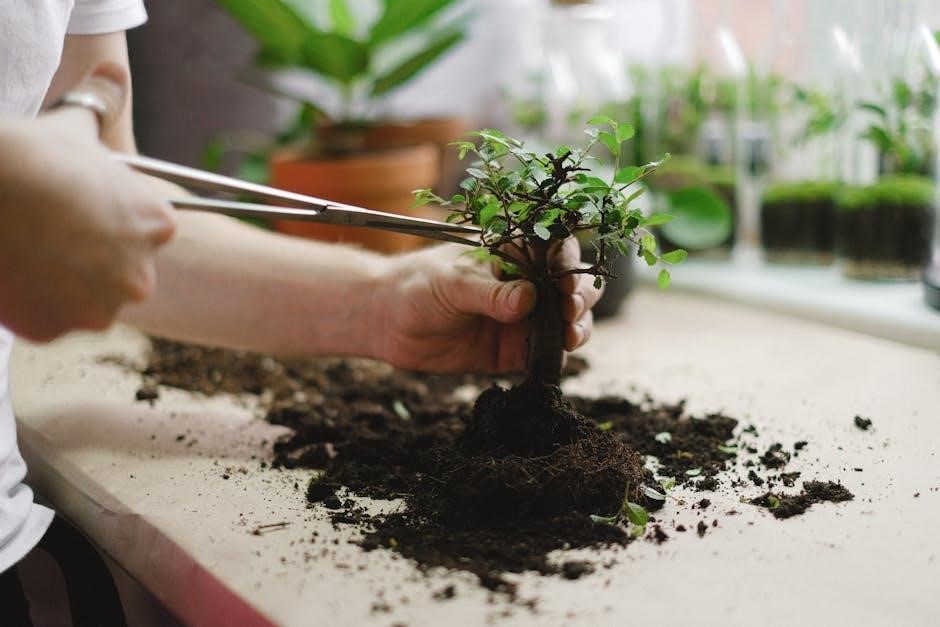
Repotting is generally necessary every 2-3 years, ideally in spring. This allows for root pruning, which encourages finer root growth and maintains the tree’s compact size. When repotting, carefully remove the tree, prune any circling or congested roots, and replant in fresh bonsai soil. Ensure the root ball remains adequately hydrated throughout the process.
Fertilizing Your Fukien Tea
Regular fertilization is vital for the health and vigor of your Fukien Tea Bonsai, especially during the growing season (spring and summer). Use a balanced liquid fertilizer diluted to half strength every 2-4 weeks. A fertilizer with a slightly higher phosphorus content can encourage flowering.
Avoid over-fertilizing, as this can lead to salt buildup in the soil and damage the roots. Reduce or stop fertilization during the fall and winter months when the tree’s growth slows down. If hard water is used for irrigation, supplementing with an iron fertilizer can prevent chlorosis, or yellowing of the leaves, ensuring lush, green foliage.
Light and Temperature
Fukien Tea Bonsai flourish with bright, indirect light and moderate temperatures, benefiting from increased humidity and protection from extreme cold or heat fluctuations.
Optimal Light Exposure
Fukien Tea Bonsai thrive in bright, indirect sunlight. Direct sunlight, especially during peak hours, can scorch the delicate leaves. An east or west-facing window typically provides ideal conditions, offering several hours of gentle light. If utilizing a south-facing window, diffuse the light with a sheer curtain to prevent leaf burn.
Insufficient light can lead to leggy growth and a loss of vibrant foliage color. Rotate your bonsai regularly to ensure even light exposure on all sides, promoting balanced development. Observe your tree closely; if leaves appear pale or growth is stunted, consider supplementing with a grow light, particularly during winter months when natural light is limited. Consistent, appropriate light is crucial for healthy flowering and overall vigor.
Temperature and Humidity Considerations
Fukien Tea Bonsai prefer temperatures between 65°F and 75°F (18°C ⎻ 24°C). Protect them from frost and extreme temperature fluctuations. While they can tolerate slightly cooler temperatures, prolonged exposure to cold can damage the tree. Maintaining consistent warmth is key, especially during the winter months.
These bonsai also appreciate higher humidity levels. Dry air can cause leaf edges to brown and potentially lead to leaf drop. Increase humidity by placing the bonsai on a humidity tray filled with pebbles and water, ensuring the pot doesn’t sit directly in the water. Regular misting can also be beneficial, particularly in drier climates. A humidifier nearby can provide consistent humidity, promoting healthy growth and vibrant foliage.
Pruning and Shaping

Regular pruning maintains the Fukien Tea Bonsai’s desired form, encourages ramification, and promotes healthy growth, while wiring assists in artistic shaping.
Pruning for Health and Aesthetics
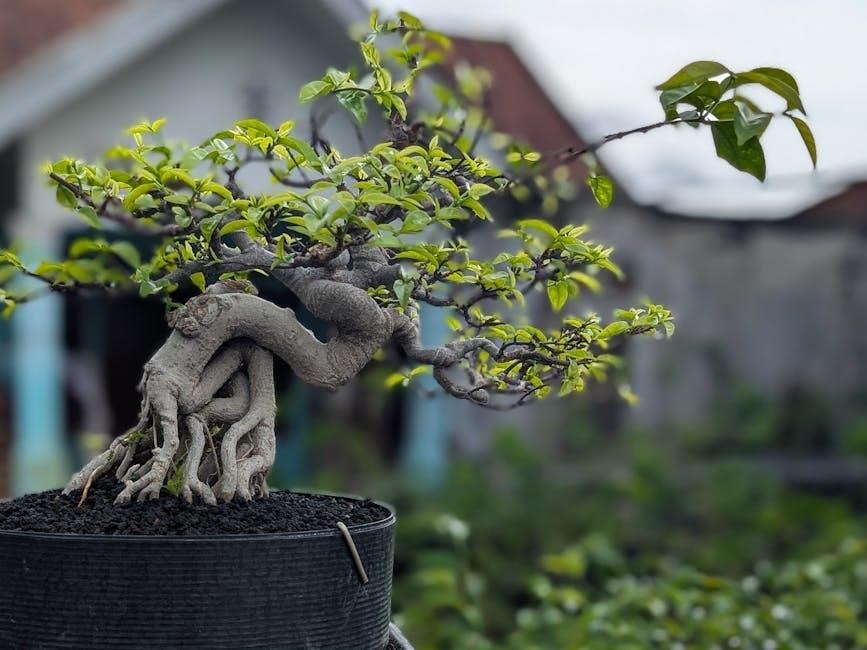
Pruning a Fukien Tea Bonsai is crucial for both its health and aesthetic appeal. Regular trimming encourages branching, leading to a denser, more refined canopy. Remove any dead or diseased branches promptly to prevent the spread of infection and maintain vigor.
Focus on shaping the tree to achieve a balanced and natural appearance. Pinch back new growth to control the overall size and encourage back budding. Consider the tree’s existing structure when pruning, aiming to enhance its inherent beauty. Avoid severe pruning, as this can stress the tree. Strategic leaf pruning can also improve light penetration and air circulation within the canopy, further promoting healthy growth and a visually pleasing form.
Wiring Techniques
Wiring is a valuable technique for shaping a Fukien Tea Bonsai, allowing you to gently guide branches into desired positions. Use anodized aluminum or copper wire, selecting a gauge appropriate for the branch’s thickness – generally, about one-third the branch diameter.
Apply the wire at a 45-degree angle, wrapping it smoothly and evenly around the branch. Avoid crossing wires and ensure they aren’t too tight, as this can damage the bark. Regularly monitor the wire, as the branch will thicken over time. Remove the wire before it begins to bite into the bark, typically within a few months, to prevent scarring. Wiring, combined with pruning, allows for artistic control over the bonsai’s form.
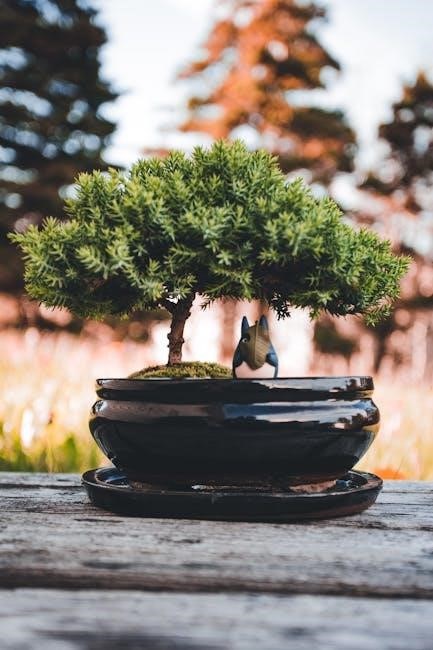
Pest and Disease Management
Regularly inspect your Fukien Tea Bonsai for pests like spider mites and address fungal issues promptly with appropriate treatments to maintain its health.
Common Pests and Their Control
Fukien Tea Bonsai, while resilient, can occasionally attract pests. Spider mites are a frequent concern, appearing as tiny moving dots on the leaves and causing stippling. Control them with a strong jet of water or insecticidal soap, ensuring thorough coverage of both leaf surfaces. Scale insects, appearing as small bumps, can also infest the tree; remove them manually with a cotton swab dipped in rubbing alcohol.
Aphids, though less common, can cluster on new growth, hindering development. These can be washed off or treated with neem oil. Consistent monitoring is crucial for early detection. Preventative measures include good air circulation and avoiding over-fertilization, which can attract pests. Always isolate any infested bonsai to prevent spread to other plants.
Recognizing and Treating Fungal Diseases
Fungal diseases in Fukien Tea Bonsai are relatively rare but can occur, particularly in humid conditions. Leaf spot, characterized by brown or black spots on the foliage, is a common manifestation. Root rot, caused by overly wet soil, is another potential issue. Early detection is key; promptly remove and discard any affected leaves or branches to prevent spreading.
Improve air circulation around the bonsai and reduce watering frequency to address humidity. For leaf spot, a fungicide specifically formulated for bonsai can be applied, following label instructions carefully. If root rot is suspected, repot the tree into fresh, well-draining soil after trimming away any affected roots. Preventative measures include avoiding overhead watering and ensuring adequate drainage.
Addressing Leaf Drop Issues
Leaf drop in Fukien Tea Bonsai can be alarming, but it’s often a response to environmental stress rather than a fatal condition. Common causes include inconsistent watering – both overwatering and allowing the soil to dry out completely – and sudden changes in temperature or light exposure. Hard water can also induce chlorosis, leading to leaf drop, treatable with iron fertilizer.
To address this, ensure consistent moisture, soaking the root ball thoroughly when watering. Avoid drastic environmental shifts and maintain stable conditions. Inspect for pests or diseases, as these can also contribute to leaf loss. If using tap water, consider using filtered or rainwater. Observe your tree closely to identify the underlying cause and adjust your care routine accordingly.

Propagation Methods
Fukien Tea Bonsai can be propagated through cuttings, offering a relatively straightforward method for creating new trees, though seed propagation is less common.
Propagation from Cuttings
Propagating Fukien Tea Bonsai from cuttings is a popular and effective method. Select a healthy, semi-hardwood cutting, typically during the growing season. Remove the lower leaves, leaving only a few at the top, and apply rooting hormone to the cut end.
Plant the cutting in a well-draining propagation mix – a blend of perlite and peat moss works well. Maintain high humidity by covering the cutting with a plastic bag or dome, ensuring adequate ventilation to prevent fungal growth.
Keep the propagation mix consistently moist, but not soggy. Root development typically occurs within several weeks to months. Once roots are established, carefully transplant the new bonsai into its own pot, using a suitable bonsai soil mix.
Seed Propagation (Less Common)
While possible, propagating Fukien Tea Bonsai from seed is considerably less common and more challenging than using cuttings. Seeds require stratification – a period of cold, moist storage – to break dormancy. Sow seeds in a well-draining seed starting mix and maintain consistent moisture.
Germination can be erratic and slow, often taking several weeks or even months. Seedlings are extremely delicate and require careful attention to light, water, and humidity. Developing a bonsai from seed takes significantly longer, potentially years, to achieve a desired shape and size.
Due to the time commitment and lower success rate, seed propagation is generally reserved for enthusiasts interested in the full lifecycle of the tree.

Seasonal Care
Adjusting care routines with the seasons—more water in summer, reduced fertilization in winter—is crucial for maintaining a healthy and flourishing Fukien Tea Bonsai.
Spring Care
As spring arrives, your Fukien Tea Bonsai emerges from its dormant period, signaling a time for increased care. Begin by gently repotting if the soil is compacted or the roots are bound, using a well-draining bonsai mix. Increase watering frequency as new growth appears, ensuring the soil remains consistently moist but not waterlogged. This is also the ideal time to begin a regular fertilizing schedule, utilizing a balanced liquid fertilizer diluted to half strength every two to four weeks.
Pruning should focus on removing any dead or crossing branches, and light shaping can encourage a fuller canopy. Monitor for pests as temperatures rise, addressing any infestations promptly. Spring’s increased humidity benefits the Fukien Tea, but ensure good air circulation to prevent fungal issues.
Summer Care
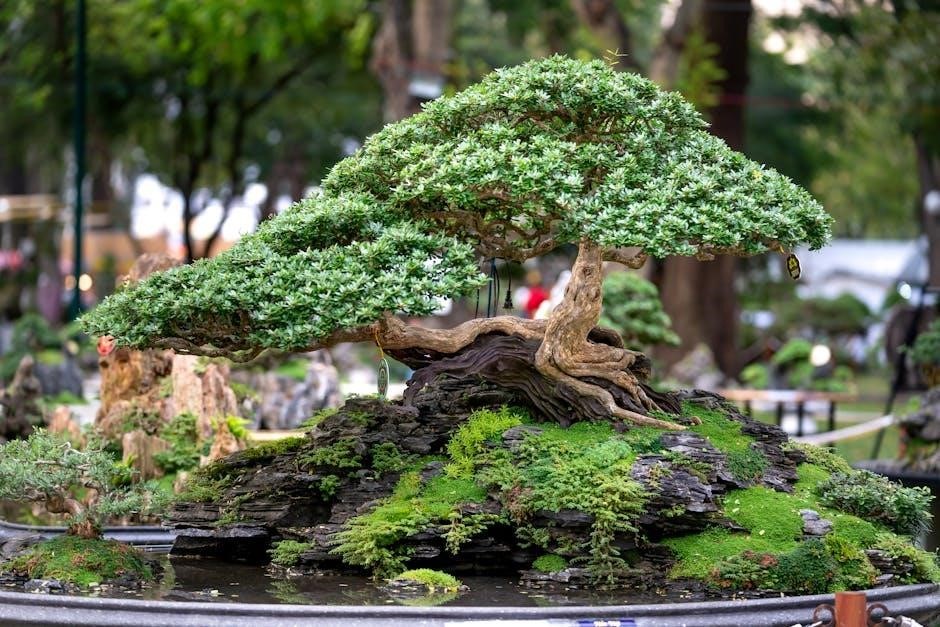
Summer demands diligent attention to your Fukien Tea Bonsai’s hydration needs. Increased temperatures and sunlight necessitate more frequent watering – potentially daily – ensuring the soil remains consistently moist, but never soggy. A humidity tray is highly beneficial, mitigating the drying effects of the heat. Continue fertilizing every two to four weeks with a balanced liquid fertilizer, though you might reduce the strength slightly during peak heat.
Protect your bonsai from intense afternoon sun, which can scorch the leaves. Monitor closely for pests, as they thrive in warmer conditions. Light pruning to maintain shape is acceptable, but avoid heavy pruning during the hottest months. Consistent observation is key to a healthy summer for your Fukien Tea.
Fall and Winter Care
As temperatures drop, reduce watering frequency, allowing the soil to dry slightly more between waterings. Fertilizing should cease entirely by late fall, allowing the tree to enter dormancy. Protect your Fukien Tea from frost and freezing temperatures; bring it indoors if necessary, providing a bright, cool location.
Maintain humidity levels, as indoor heating can dry the air. While growth slows significantly, continue to monitor for pests. Light pruning can still be performed to refine shape, but avoid major structural changes. Ensure adequate light exposure even indoors, supplementing with grow lights if needed, to prevent leaf drop and maintain overall health throughout the dormant season.